
Minimalist Abstract Art for Bedroom: How to Create a Calm, Sophisticated Sleep Sanctuary
In a world filled with visual noise, the bedroom remains one of the few spaces where calm is essential. Minimalist abstract art for bedroom offers the perfect balance of quiet beauty and intentional design. These works rely on restrained color, clean composition, subtle texture, and generous negative space to create a restful atmosphere without sacrificing visual interest. Unlike busy figurative scenes or high-contrast graphics, minimalist abstracts support the primary function of the bedroom—rest and recovery—while still elevating the room into a refined, personal retreat.
This guide explores why minimalist abstract art succeeds so well in bedrooms, the best color and textural approaches, precise sizing and hanging rules, placement strategies, styling advice, and current trends. Whether you prefer soft neutrals, monochromatic tones, or gentle organic forms, the right piece can transform a simple sleeping space into a thoughtfully curated sanctuary.
Why Minimalist Abstract Art Belongs in the Bedroom
Minimalism in art is not emptiness; it is careful reduction. By stripping away unnecessary detail, these works allow the eye to rest. Soft gradients, quiet brushwork, single gestural marks, or carefully balanced geometric shapes create a sense of order and spaciousness. In a bedroom, this quality is particularly valuable because the art becomes part of the last and first visual experiences of each day.
Research and design practice consistently show that lower visual complexity supports relaxation. Cool, muted, or earthy palettes further reinforce this effect. A well-chosen minimalist abstract above the bed or on a secondary wall can lower the perceived energy of the room, making it easier to wind down in the evening and wake up without visual stimulation.
Handcrafted pieces with subtle texture add another layer of quiet luxury. Soft impasto, delicate layering, or fine surface variation catch light gently throughout the day without demanding attention. This combination of restraint and craftsmanship is why minimalist abstract art continues to be a preferred choice for modern, Scandinavian, Japandi, and contemporary bedrooms.
Choosing the Right Color Palette for Rest
Color has a measurable impact on mood and sleep readiness. For bedrooms, designers favor:
- Soft neutrals: warm whites, ivory, soft beige, taupe, and light gray
- Cool, calming tones: pale blues, soft blue-grays, muted sage, and dusty aqua
- Warm grounding earth tones: sand, clay, soft terracotta, and warm taupe (used sparingly)
- Monochromatic schemes: black, white, and charcoal with subtle tonal shifts
High-contrast or highly saturated colors can feel energizing, which is rarely ideal for a sleep space. Instead, look for pieces that sit comfortably within a narrow tonal range. A painting that moves gently from warm white into soft gray or from pale sand into muted olive creates depth without visual noise.
Echo one or two tones from the artwork in bedding, throws, or a single accent pillow. This creates quiet cohesion without forcing a strict match.
Size and Placement Guidelines
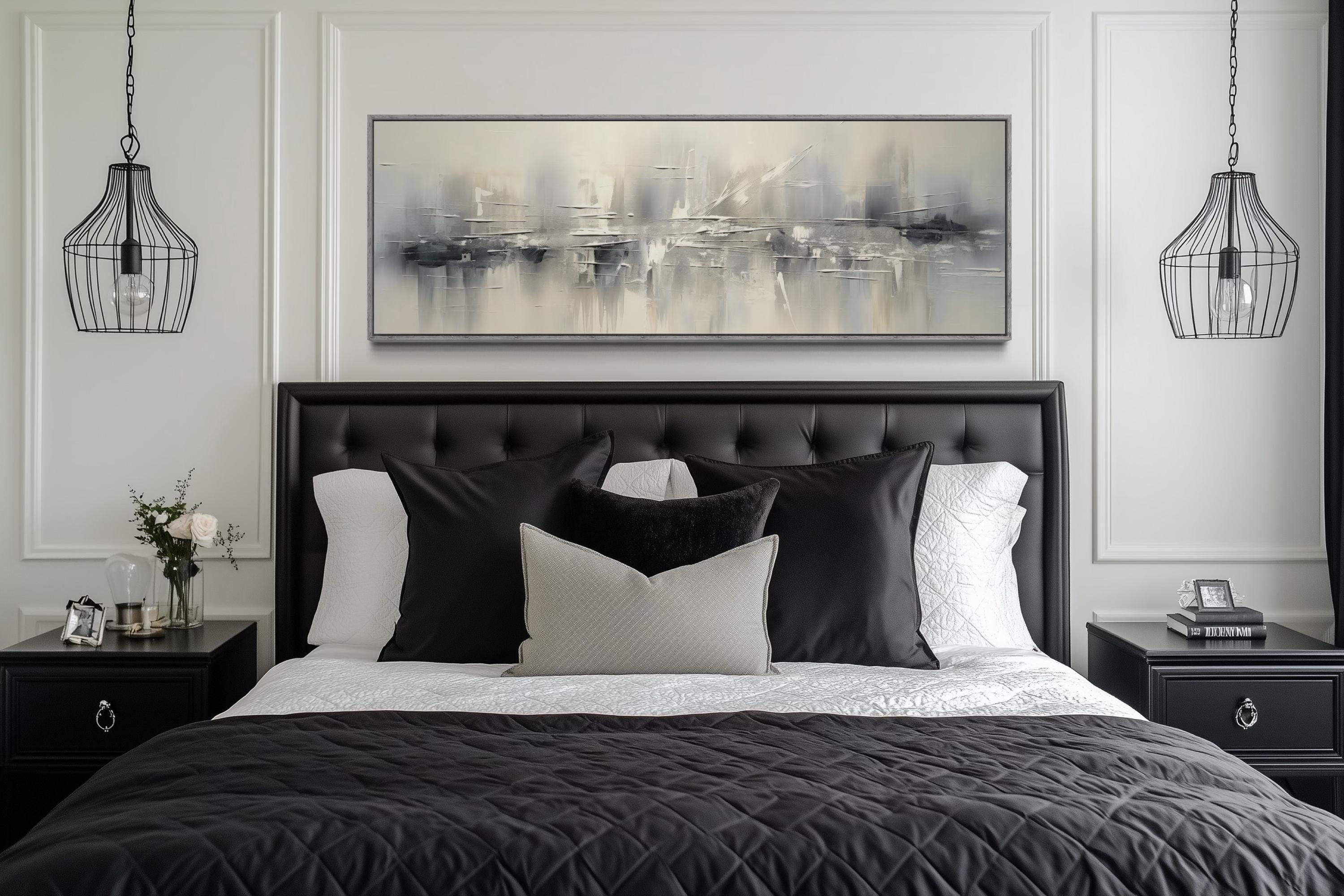
Correct scale is essential. The most reliable rule is that the artwork (or grouping) should span approximately two-thirds to three-quarters the width of the headboard or bed. Practical guidelines include:
- Queen bed (approximately 60 inches wide): art 40–48 inches wide
- King bed (approximately 76 inches wide): art 50–60 inches or slightly larger
- Height: typically 24–36 inches for most residential ceilings; taller pieces work only if the wall proportion and headboard height support them
Leave 6–10 inches of clear space between the top of the headboard and the bottom edge of the artwork. This gap keeps the composition connected to the bed without feeling cramped. When possible, position the center of the piece near standard eye level (57–60 inches from the floor), adjusting slightly for high headboards or taller ceilings.
According to professional hanging advice from design publications such as House Beautiful, art should generally sit at eye level, and pieces hung above furniture benefit from a measured gap that maintains visual relationship with the furniture below.
Center the artwork over the bed rather than the wall. This anchors the composition to the primary furniture piece and creates a more intentional, balanced look.

Texture, Style, and Composition Choices
Minimalist does not mean flat or cold. The most successful bedroom pieces often include:
- Soft, layered textures that catch light subtly
- Gentle horizontal or organic marks that suggest calm movement
- Balanced negative space that allows the composition to breathe
- Monochrome or limited-palette works with tonal variation
- Clean geometric or linear elements used sparingly
Avoid highly aggressive gestures, dense patterning, or sharp high-contrast forms that can feel restless at close range. Horizontal formats often work especially well above beds because they mirror the width of the furniture and create a grounding effect. Square or slightly vertical pieces can also succeed when proportions are carefully considered.
Placement Beyond the Headboard Wall
While the wall above the bed is the natural focal point, other locations can enhance the room:
- The wall opposite the bed becomes the first thing you see upon waking
- A quiet piece on a side wall near a reading chair or dresser adds balance
- A pair of smaller related works flanking a window or doorway can create gentle symmetry
In true minimalist bedrooms, one strong piece is usually more effective than a gallery wall. Multiple small works can introduce visual clutter that undermines the calm atmosphere.
Styling and Lighting Considerations
Keep surrounding surfaces relatively clear. Nightstands, a simple bench, or a single plant allow the artwork to remain the quiet focal point. Soft, diffused lighting—whether from wall sconces, picture lights, or warm overhead fixtures—enhances texture without creating harsh shadows.
Natural light is ideal, but protect the artwork from prolonged direct sunlight to preserve color integrity over time. Many high-quality minimalist abstracts use archival materials that resist fading, yet thoughtful placement still matters.
Current Preferences in 2026
Recent interior trends favor understated, textured minimalist abstracts in warm neutrals and soft coastal or earthy tones. Customizable sizes and subtle handcrafted surfaces continue to grow in popularity because they allow the art to fit the exact proportions of the bed and room. Pieces that feel both contemporary and timeless perform especially well in primary bedrooms.
Practical Buying Tips
Measure the headboard and the available wall space before purchasing. Look for handcrafted works with clear close-up images of texture. Confirm shipping methods (many large canvases ship rolled and can be stretched or framed locally) and review return policies. Collections focused specifically on minimalist abstract painting often provide the best selection of restrained, high-quality options suitable for bedrooms.
Conclusion
Minimalist abstract art for bedroom succeeds because it supports the emotional purpose of the space. Through restrained color, careful scale, subtle texture, and thoughtful placement, these works create an atmosphere of calm sophistication. Follow the two-thirds width guideline relative to the bed, maintain proper clearance above the headboard, choose a quiet palette, and allow the artwork breathing room. The result is a bedroom that feels intentional, restful, and elevated—exactly what a personal sanctuary should be.
Frequently Asked Questions (FAQ)
Q: What size should minimalist abstract art be above a bed? A: Aim for approximately two-thirds to three-quarters the width of the headboard. For a queen bed, 40–48 inches wide is often ideal; for a king, 50–60 inches or slightly larger works well. Height is typically 24–36 inches depending on ceiling height.
Q: How high should I hang art above the headboard? A: Leave 6–10 inches of space between the top of the headboard and the bottom of the artwork. The center of the piece should ideally sit near 57–60 inches from the floor when possible.
Q: What colors work best for minimalist abstract art in a bedroom? A: Soft neutrals (beige, ivory, taupe, light gray), pale blues, muted greens, and warm earth tones. Avoid high-contrast or highly saturated colors that can feel stimulating rather than restful.
Q: Is textured art suitable for a minimalist bedroom? A: Yes. Soft, subtle texture adds quiet depth and luxury without introducing visual noise. Heavy or aggressive texture is usually less appropriate for sleep spaces.
Q: Should I choose one large piece or a set of smaller works? A: One carefully scaled piece generally creates a calmer, more minimalist result. A tightly related diptych or triptych can work if the overall width still follows the two-thirds guideline and spacing remains consistent.
Q: Can minimalist abstract art work in a small bedroom? A: Absolutely. A well-proportioned piece can actually make a small room feel more spacious by providing a clear focal point and reducing visual clutter.
Q: How do I style the rest of the room with minimalist abstract art? A: Keep nightstands and surfaces relatively clear. Echo one or two soft tones from the artwork in textiles. Use soft, warm lighting and allow the art to remain the primary visual statement.
Q: Where can I find high-quality minimalist abstract art suitable for bedrooms? A: Look for curated collections of handcrafted minimalist abstract paintings that emphasize restrained palettes, subtle texture, and customizable sizes. The minimalist abstract painting collection at BigArtify is specifically focused on these qualities and includes options well suited to bedroom environments.
With the right scale, palette, and placement, minimalist abstract art becomes more than decoration—it becomes a quiet daily companion that supports rest, clarity, and understated beauty.