How to Buy Drip and Action Paintings Without Pretending You Own a Pollock
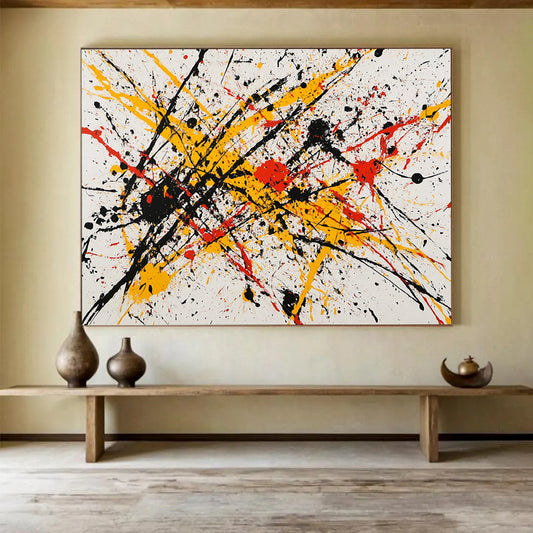
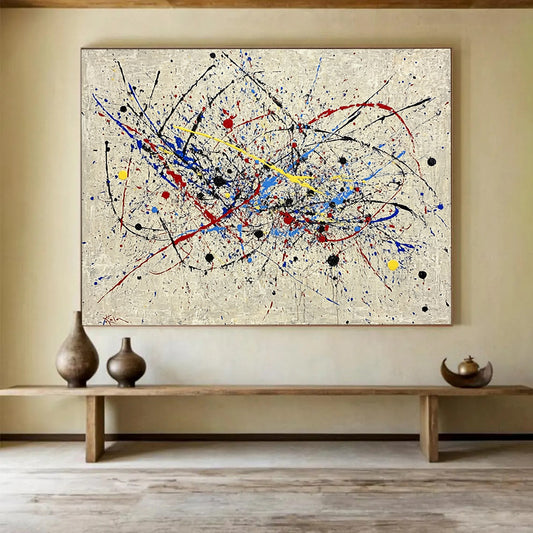
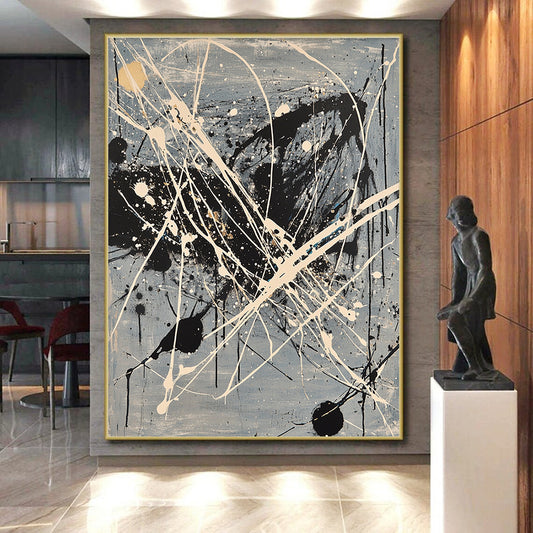
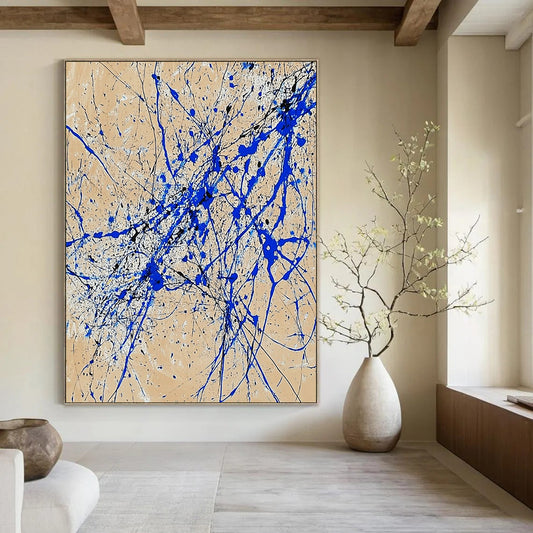
The collection name is a search phrase. It is not a signature. Nothing on this page is a Jackson Pollock, a studio leftover, or a licensed museum replica. What you can order from Artwork By Pollock is a contemporary canvas painted in the drip-and-pour language he made famous—and that language is easy to fake badly.
A good poured painting is a record of gravity, speed, and layers. A bad one is spaghetti on beige. The difference is visible from the sofa if you know what to look for.
What the method actually was
Critics called the mid-century approach action painting: paint dribbled, flung, or smeared so the finished surface keeps the act of making it. Drip painting is the subset that matters here—canvas often on the floor, paint thinned enough to travel, tools that are not always brushes.
MoMA’s note on Pollock’s One: Number 31, 1950 is the useful museum sentence: he worked around an unstretched cloth on the floor, pouring and flicking enamel so the picture is an all-over web rather than a scene with a center. Scale was part of the idea. A drip sketch the size of a laptop is a sample. A drip field the width of a sofa can still fail if every strand is the same thickness and the same black.
You are buying a studio’s version of that problem: all-over energy that does not collapse into decoration.
Three failures that make “Pollock style” look cheap
The photocopy drip. A print of drips has highlights printed in place. Real pours stack. Walk sideways; enamel ridges and pooled skins change. If the shop cannot send a raking-light detail, assume poster.
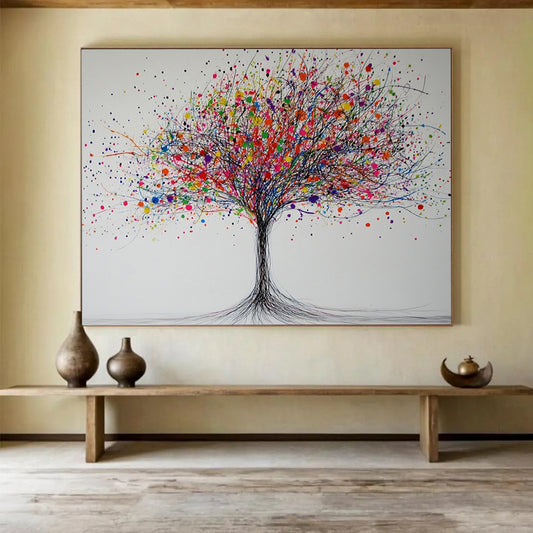
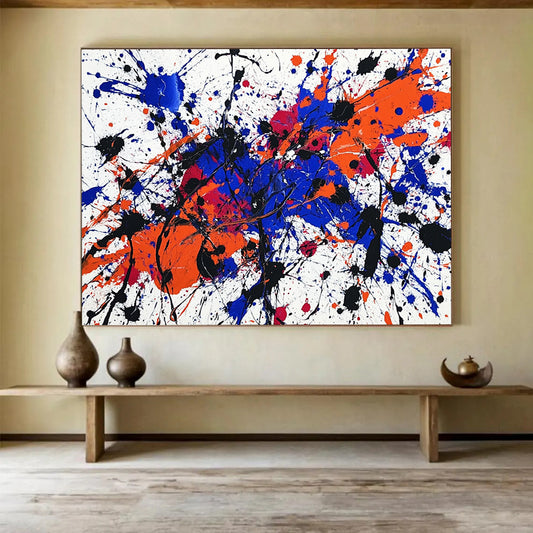
The rainbow can. Museum drip pictures are often restricted: black, white, umber, a little teal or aluminum. Six fluorescent primaries plus gold leaf is party confetti. It photographs well and dates faster.
The empty middle. All-over means the eye can enter anywhere. If the painter left a quiet bull’s-eye and framed it with noodles, you have a wreath, not a field. Ask for a photo of the full canvas, not a corner crop of the “best” splatters.
A fourth failure is honesty in the title. “By Pollock” in a product name should never be read as authorship. If a listing implies an original or a numbered reprint of a museum work, walk away. Commission language should be “drip / poured / action-style, painted to order.”
How to judge a handmade poured canvas
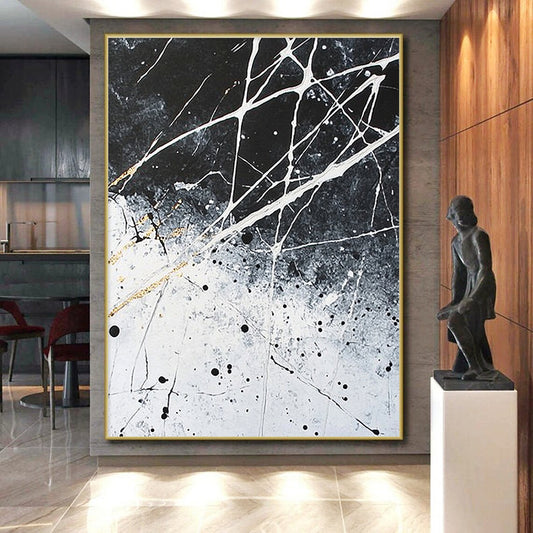
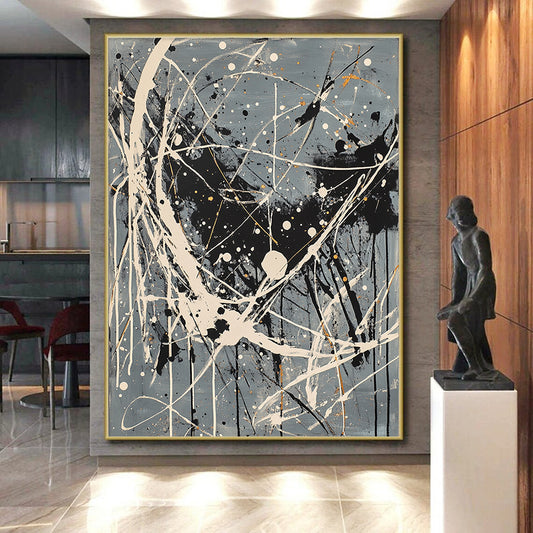
Look at line variety. You want hairline skeins, thicker ropes, and a few puddles—not one nozzle width. Look at layer order: late pale lines should sit on earlier darks, or the reverse, so the web has depth. Look at the ground. Raw or stained canvas showing through is part of the air; a fully filled candy coating is usually weaker.
Color: pick a climate.
- Bone, black, umber. The most durable in a living room.
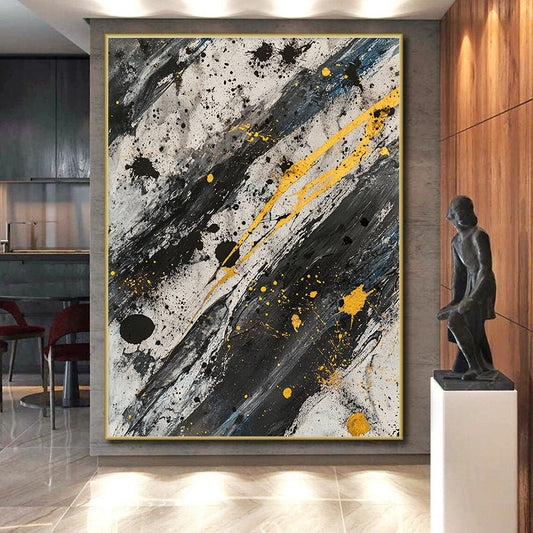
- Black, white, one cold metallic. Sharper, more modern, easier to overdo.
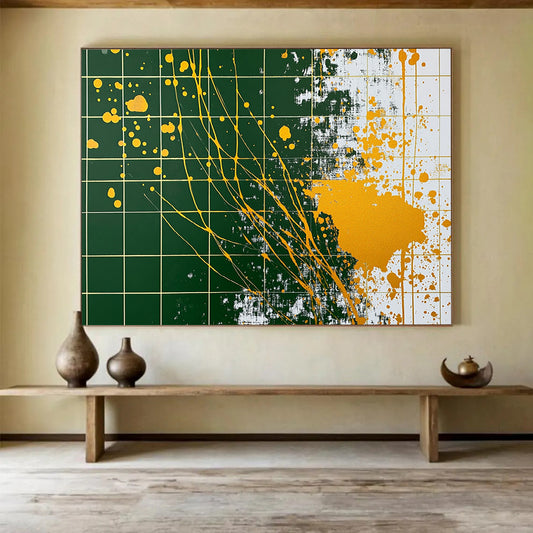
- Restricted teal or oxide inside a mostly neutral web.
- Avoid equal red-yellow-blue fireworks unless the room is a blank loft and you want that noise.
Custom color is the trap. “Please match my teal sofa and add gold” turns an all-over field into a mood board. Better: keep the structure, shift temperature (warmer brown-black, cooler blue-black).
Scale, rooms, and shipping
Drip needs width. Above a sofa, start near two-thirds of the furniture. A 24-inch poured square looks like a coaster. On a high wall, height matters as much as the web; a short splash under a two-story void looks unfinished.
These paintings are restless. They want a calm neighbor: plain plaster, simple sofa, little pattern. A busy rug plus a dense web is two storms. Bedrooms can take a quieter, paler pour; dense black skeins behind a bed behave like a second screen.
Poured work often has real relief. Ask how oversized pieces ship. Rolling a canvas of uncured enamel ropes can glue layers together. Crate or paint-after-stretch is the grown-up answer. Do not varnish a glossy enamel web unless the studio explains why; extra gloss can turn the surface into plastic.
Frame: a thin float in oak or black. An ornate gilt frame on drip paint is a costume.
What you are actually paying for
Not a name. Not chaos-as-branding. You are paying for a physical all-over surface made by a person who can stop—who knows when the next pour would kill the air. That judgment is the only thing that separates this collection from a drip filter.
If the canvas still looks like a decision from ten feet, and like paint from one foot, it is doing the job. If it only works as a thumbnail with the word Pollock on it, it is not.
Are these Jackson Pollock originals or official replicas?
No. They are contemporary, made-to-order canvases in a drip and pour manner. Original Pollocks belong to museums and private collections. A shop title that uses his name for search is not a certificate of authenticity.
How can I tell real poured paint from a printed “drip” image?
Use a raking-light photo. Real strands have thickness and shadows that move when the camera moves. A print of drips keeps the same highlight. Touch is even clearer in person: enamel skins and pooled edges are objects.
Why do small drip paintings often look weak?
The language was built at mural scale. Tightened down, the web becomes noodle texture. If you need a small work, choose fewer, thicker decisions—not a miniature of a ten-foot all-over.
Can I request extra colors to match my room?
You can, and it often ruins the field. Keep black, white, and one earth or one cool accent. Matching every pillow turns action painting into a swatch deck.
Will a drip painting look dated?
The cliché version will: rainbow splatters, gold dust, the artist’s name in the title. A restricted palette, visible layering, and enough scale to breathe still reads as a surface, not as a 1990s poster.
Does poured enamel need special hanging or framing?
Give it a quiet wall and a simple float frame. Confirm the paint is cured before shipping, especially if the piece rolls. Do not scrub the surface; dust with a dry, soft brush. High peaks next to a sofa should sit high enough that shoulders do not scuff them.