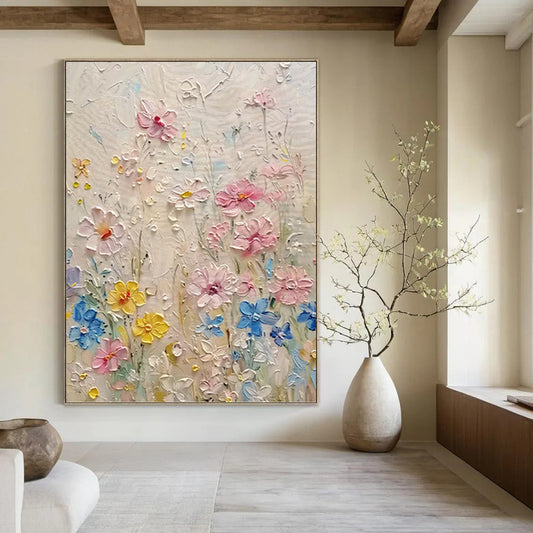
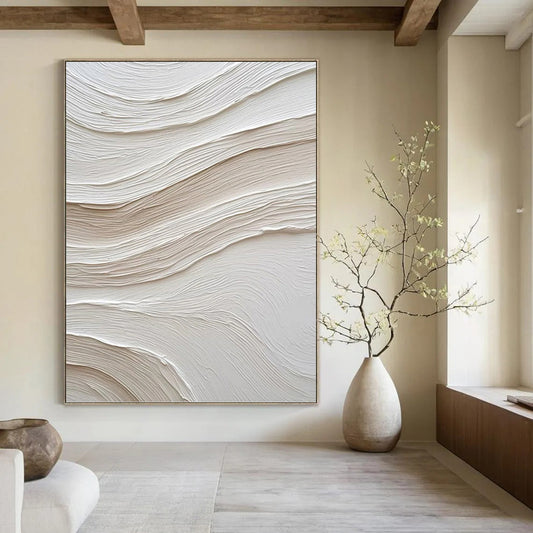
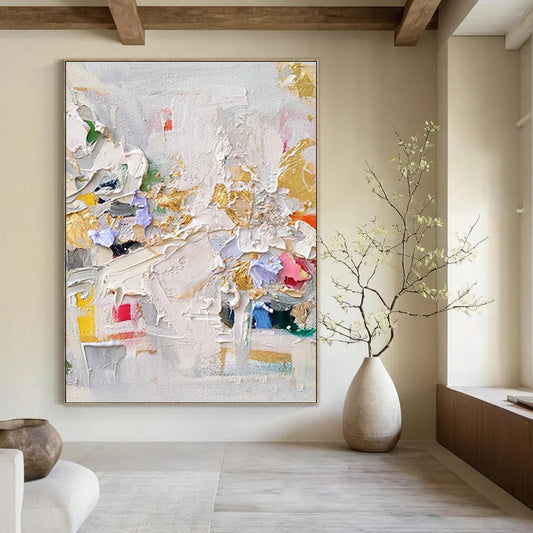
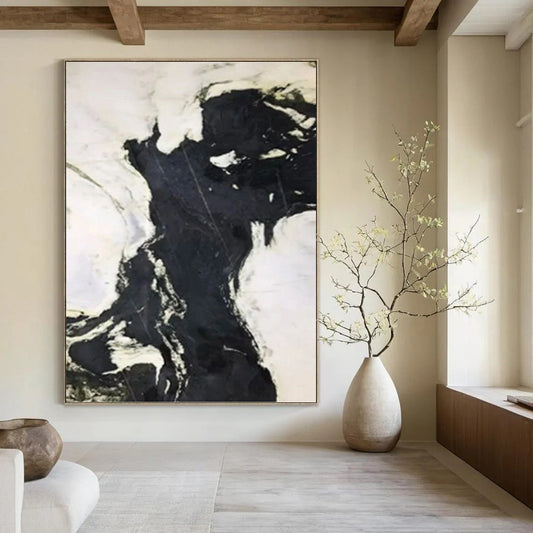
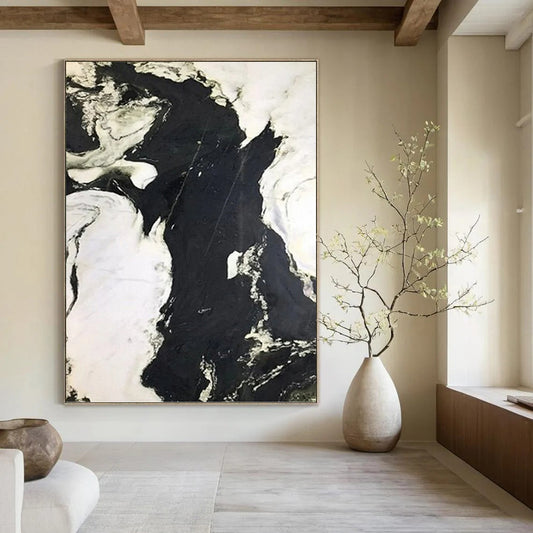
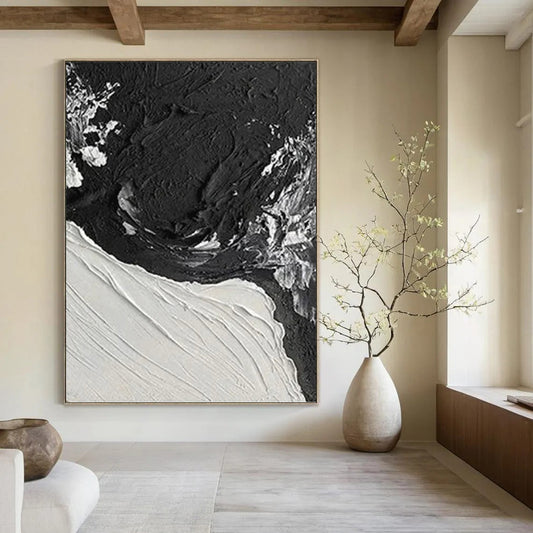
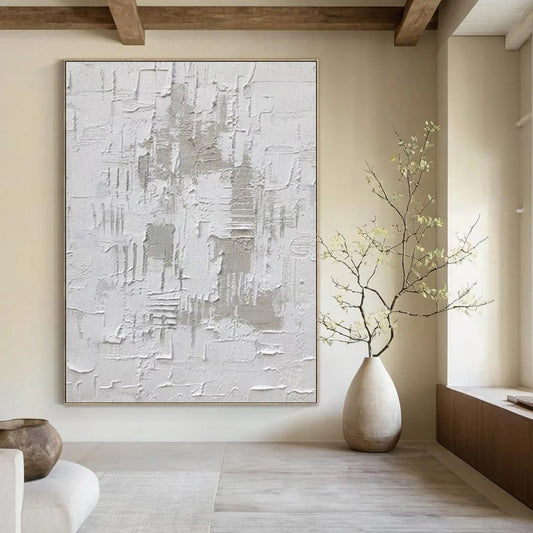
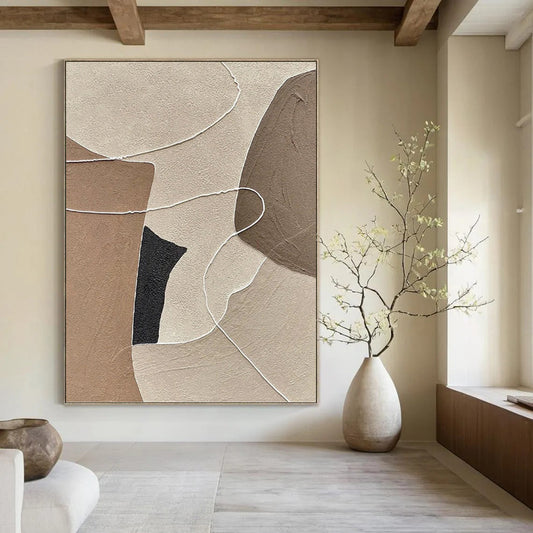
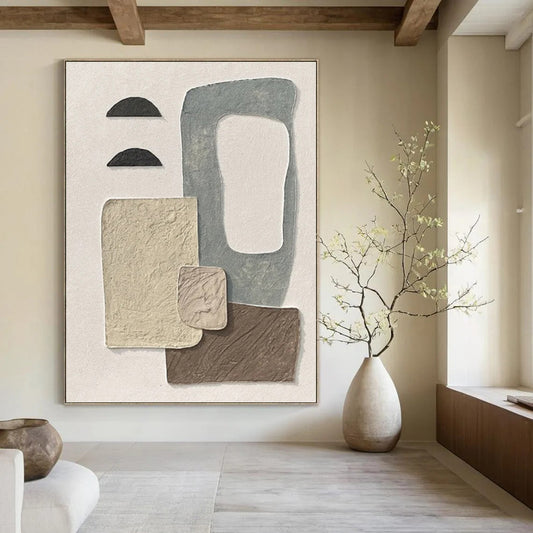
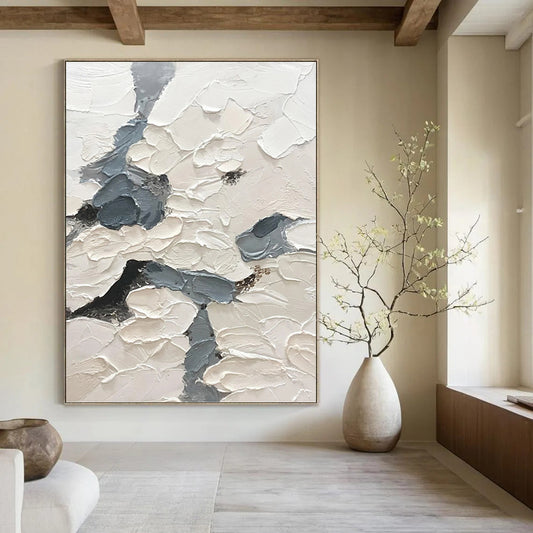
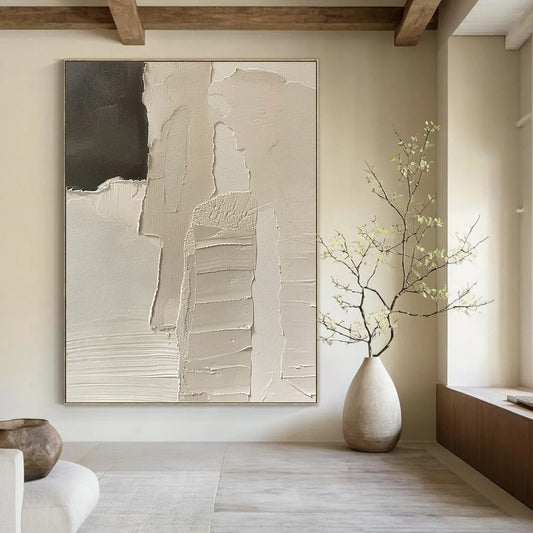
How to Choose 3D Artwork That Actually Leaves the Wall
“3D” on a shopping site usually means one of three different objects. A canvas with proud ridges of paint. A relief with shapes built up in paste or mixed media. Or a file sent to a printer that makes a plastic souvenir. Only the first two belong in a hand-painted wall collection. If the surface does not cast a shadow when the sun moves, it is not three-dimensional. It is a picture of texture.
Look through BigArtify’s 3D Artwork with a tape measure and a note about light. Depth without sidelight is just a heavier box.
Relief is an old wall problem
Tate’s glossary is the clean definition: a relief is wall-mounted sculpture whose forms rise from a flat base. That is what you want from this category—not a hologram, not a lenticular postcard, not VR.
Painters have chased the same idea with matter instead of carved stone. Tate calls matter painting thick paste that may include sand or other bulk so the picture is also an object. When found pieces are attached to a support, the studio language shifts toward assemblage—elements that project from a substrate.
A custom abstract for a sofa is rarely Tatlin or Dubuffet. It is still the same test: does the work occupy a few millimeters to a few centimeters of real space, or only a photograph of space?
Rank the build before you rank the colors
Ask for depth in millimeters, not the word sculptural.
- Low relief (about 2–6 mm). Knife ridges and stacked strokes. Reads as paint. Ships more safely. Enough for most living rooms.
- Medium relief (about 7–20 mm). Planes and cords that throw a clear shadow at 4 p.m. This is the useful “3D” for homes.
- High build (20 mm and up). Object more than picture. Needs a quiet wall, a crate, and a hanging system that is not a single nail.
If the listing cannot say how far the highest peak stands off the stretcher, treat “3D” as marketing for ordinary impasto.
Also ask what the bulk is made of: heavy-body acrylic, oil, modeling paste, sand, plaster, fabric, wood slats. Paste on canvas is one conservation problem. Mixed objects glued to linen are another. You want to know before a peak shears in a tube.
Light is the fourth material
Relief without raking light is a rumor. Stand in the room at the hour you use it. A window from the side makes ridges readable. A ceiling can pointed straight down erases them and leaves you with lumps.
North rooms need either more height in the build or a picture light at a shallow angle. West rooms will dramatize every ridge at dinner; a high-contrast gold-on-white relief can feel busy by 6 p.m. Matte or satin skins sit better than high gloss, which turns every peak into a glare.
Do not hang deep relief opposite a TV if evening lamps rake across it. The wall will flicker in the corner of your eye.
Rooms, weight, and people
Living room. Medium relief on a plain wall. Keep the rug quieter than the surface.
Hallway. People walk close. High peaks get clipped by shoulders and bags. Keep depth modest or hang higher.
Bedroom. Low to medium. Aggressive cords next to a bed collect dust and shadow in a way that does not rest.
Above a sofa. Leave 6–10 inches above cushions so heads do not scuff the build. Width still follows two-thirds of the sofa; depth is a separate purchase.
Weight rises with paste. Confirm hanging hardware and wall type. A 60-inch canvas with plaster ridges is not the same object as a print in a thin frame.
Dust is part of ownership. Soft, dry brush from the top down. No wet cloth into troughs. Kitchens and humid baths are poor homes for open relief.
Shipping is where 3D dies
Rolled tubes flatten peaks and can glue wet layers together. If the build is more than modest knife work, the honest sentence is: paint after stretching, or crate it. “3D” that ships like a poster is usually low relief wearing a title.
Custom size is still worth it for odd walls. Do not “add more 3D” to fill extra width. Extra empty plaster around a decided relief is better than stretching one motif into a mountain range of leftover paste.
Frame: a deep float with a gap so peaks do not hit the rebate. A tight traditional frame will crush the only thing you paid for.
What you are paying for
Not the numeral 3. You are paying for a surface that changes between 10 a.m. and 4 p.m., and for a studio that knows when another ridge would be noise. If a raking-light photo and a depth number cannot be produced, buy a flat field instead. Flat color, honestly made, beats theatrical paste that arrives crushed.
How many millimeters count as 3D artwork?
There is no legal number. In homes, you start to see a shadow around 3–5 mm in sidelight. Below that it is textured painting. Above about 20 mm you are hanging a relief object and should plan weight, dust, and shipping as sculpture.
Is this the same as a 3D printed wall panel?
No. A printed panel is a machine object from a file. This collection is built by hand in paint and paste. Prints can be crisp and repeatable. Handmade relief is irregular and light-dependent. Do not mix the two on one wall unless you mean to.
How is 3D artwork different from your textured art collection?
Texture can be a skin. 3D should project. If both collections share the same SKUs, use the depth number, not the title. Buy here when you care about cast shadow; buy textured when you want ridges that still live as painting.
Will thick relief crack if the canvas is rolled?
It can. High paste is safest stretched and crated. If a shop pours 15 mm of modeling paste then rolls the cloth, expect flattened or sheared peaks. Ask the sequence: stretch first or paint first.
How do I clean and hang a built-up canvas?
Dry brush only. Confirm D-rings or a French cleat on heavier pieces; one sawtooth hanger is not enough. Keep the work off HVAC blow and cooking grease. Do not lean frames against the face in storage.
Does 3D abstract art work in a small room?
Low and medium relief can, if the palette is limited and the wall is plain. High-build plus a busy rug plus a small room is three kinds of congestion. Reduce depth before you reduce width.