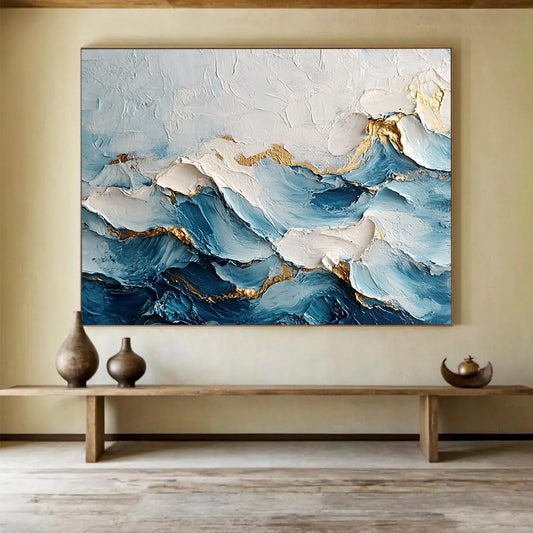
How to Choose Abstract Art Paintings for Real Rooms
Abstract paintings are easy to like in a grid and hard to live with on a wall. Color that looks sophisticated at two inches can dominate a sofa. Gesture that looks “expressive” on a phone can read as noise across a living room. Buy the canvas as a piece of wall architecture: size first, then temperature, then surface.
Start with BigArtify’s Abstract Art Paintings after you have three numbers—wall width, furniture width, ceiling height—and a honest note about how busy the room already is.
What “abstract” is actually promising
Abstract art uses shape, color, and line with some independence from recognizable things. The departure can be slight or total. Tate’s glossary on abstract art splits the field in a useful way for shoppers: work that simplifies a landscape or figure, and work that has no source in the visible world at all.
That split is a buying filter.
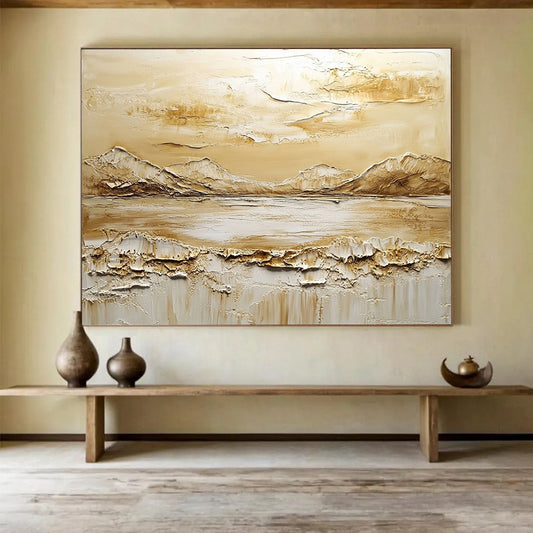
- Soft abstraction still hints at weather, coastline, or interior light. Easier in traditional rooms.
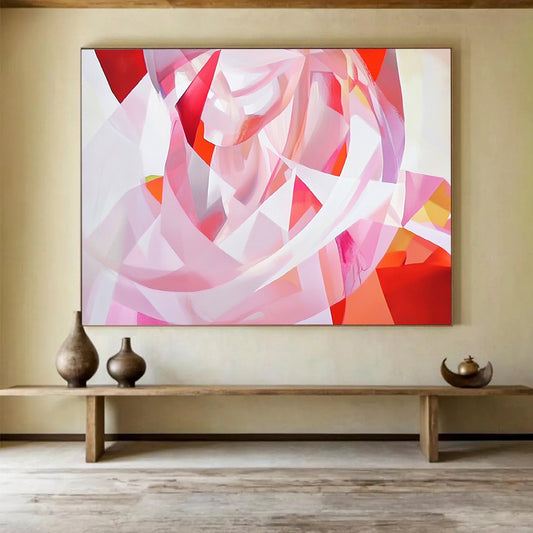
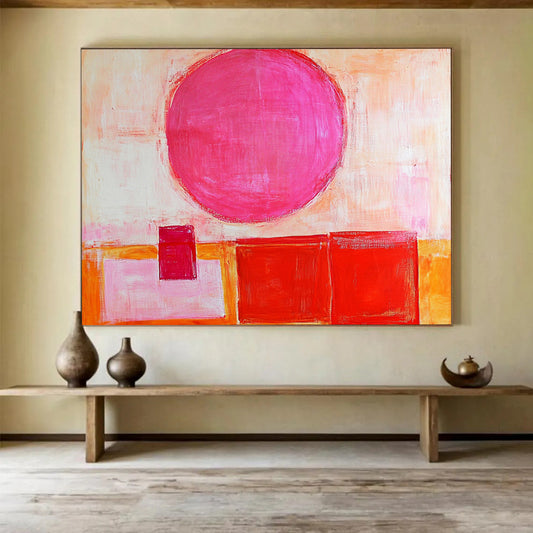
- Pure abstraction is planes, bands, splatters, or geometry with no caption. Easier in modern rooms, and usually stronger at large scale.
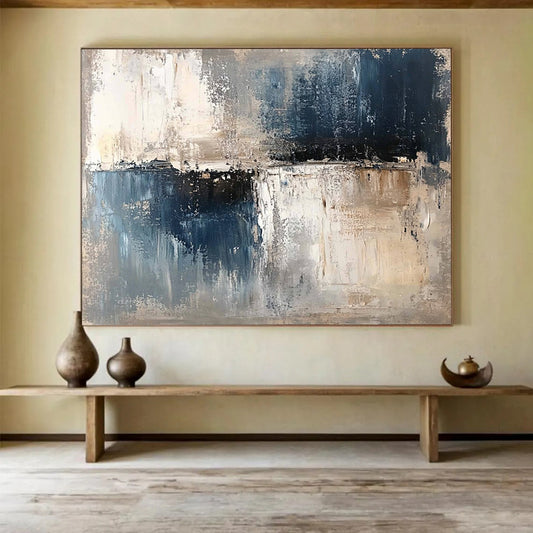
- Gestural abstraction, including the postwar language described under abstract expressionism, keeps the record of the hand—drip, scrape, collision. It needs a quiet wall.
You do not need a museum label on the stretcher. You do need to pick one of those languages and stay there. A canvas that tries to be landscape, drip painting, and gold geometry at once usually looks unfinished at hanging distance.
Size before palette
Abstract work fails most often because it is too small. A 24-inch field over an 84-inch sofa looks like a sample.
Sofa wall. About two-thirds of the sofa width. Leave 6–10 inches above the back cushions.
Open wall. About 60–75 percent of the available width, with a margin of plaster on both sides. Edge-to-edge canvases feel theatrical in ordinary rooms.
High ceiling. Height is a separate purchase. A wide, short abstract under a two-story void looks like a stamp. Go taller, or accept that the wall needs more than one idea.
Custom size. Made-to-order canvas exists because niches are not SKUs. Keep the composition’s proportions. Stretching a square idea into a 2:1 panorama is a different painting.
Hang the visual center near 57–60 inches from the floor in standing rooms. Over furniture, the clearance rule wins if the two conflict—then the canvas is probably too tall.
Gesture, field, and geometry
Three studio habits cover most of what you will see in this collection.
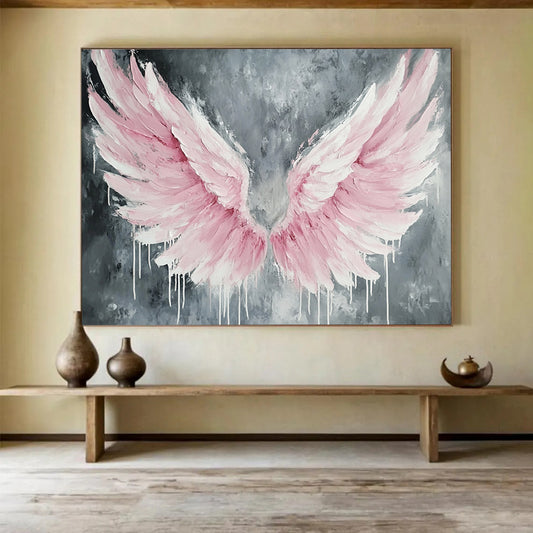
Gesture / drip. Visible speed. Good in calm, contemporary rooms. Tiring in a family room already full of pattern and screens.
Color field. Broad, relatively even areas. The painting becomes a climate rather than a scene. Strong in bedrooms and large living rooms.
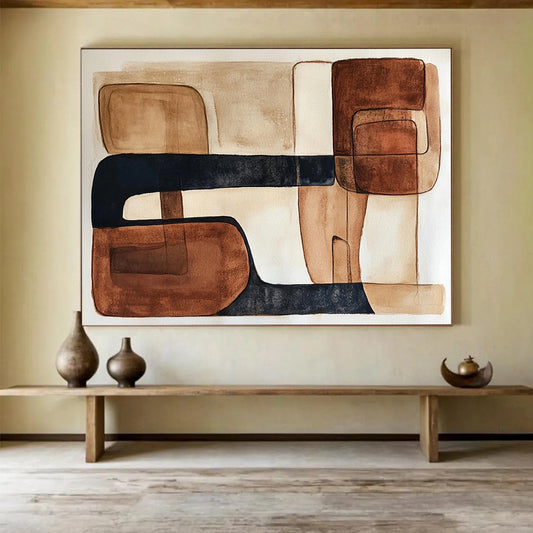
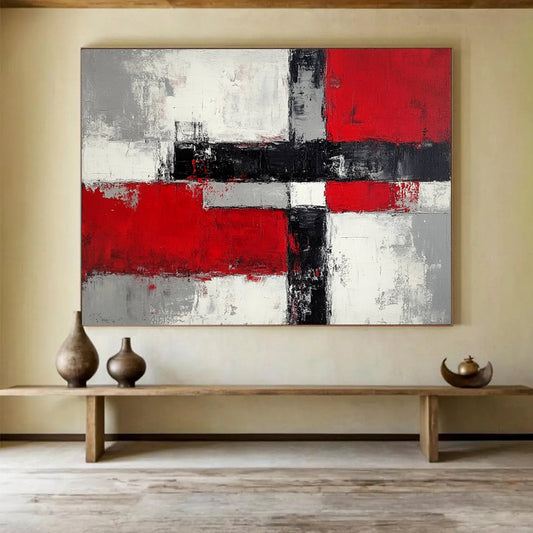
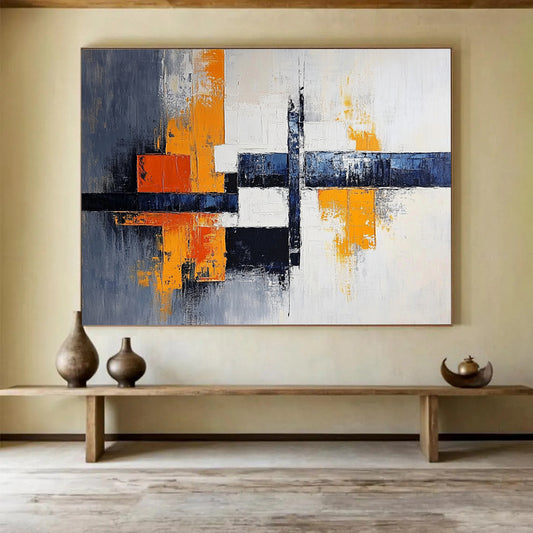
Geometry. Grids, circles, hard bands. Architectural. Needs a quiet rug and simple upholstery, or it doubles the pattern load.
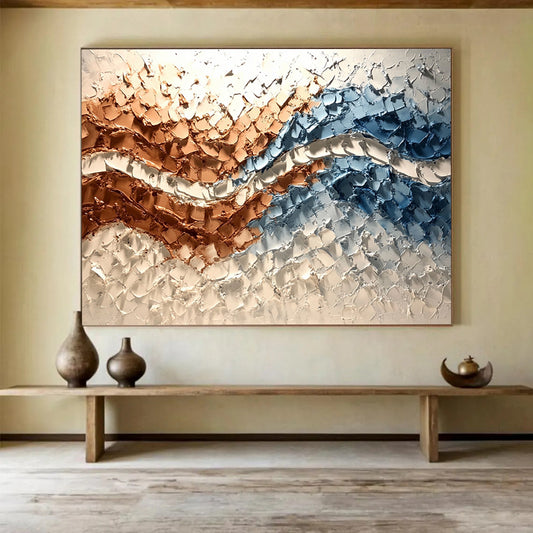
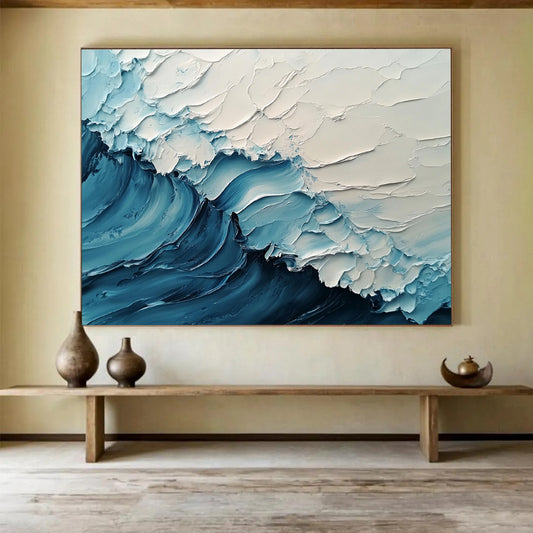
Texture sits across all three. Palette-knife ridges and impasto catch sidelight and disappear under flat downlights. If the only light is a ceiling can, buy lower relief or add a picture light at a shallow angle.
Color that survives the room
Ignore the word “vibrant” until you have named three colors you can live with for years.
- Neutrals plus one accent (graphite, sand, chalk, one rust or ink) are the most durable next to wood and stone.
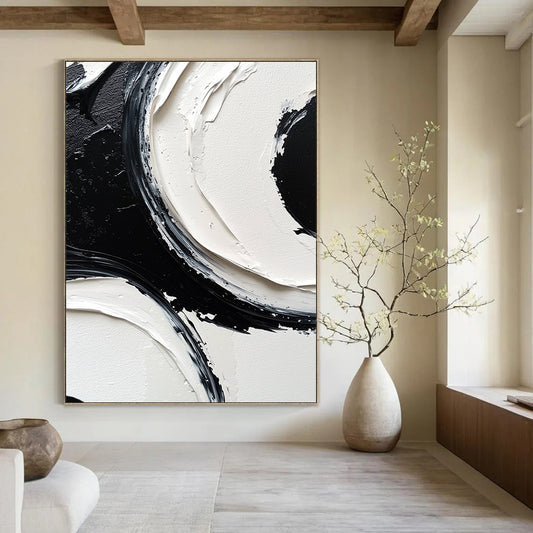
- Black and white needs warm materials nearby—oak, wool, cream plaster—or the room goes clinical.
- Full-spectrum abstracts need a room that can absorb them. They rarely belong in a small bedroom already painted a strong color.
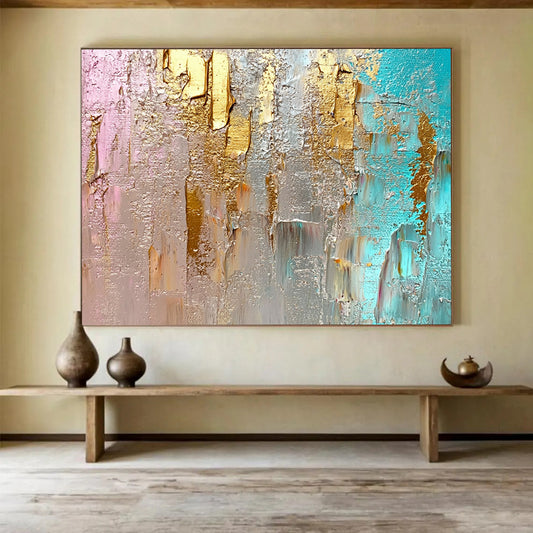
- Gold or metallic marks should be a decision, not a default. They flash at night and fight existing brass.
Look at a detail crop of actual paint, not only a digitally staged interior. You are buying surface as much as composition.
Rooms, briefly
Living room. One large canvas beats a row of small “matching” abstracts unless you want a gallery wall on purpose.
Bedroom. Lower contrast, fewer hot spots. Soft fields read as rest.
Dining room and hallway. Walking views. Broad shapes beat compositions that only resolve at arm’s length.
Office. Geometry and muted fields sit better on camera than high-chroma action painting behind your head.
Do not match every pillow to every color in the painting. Pull two tones. The wall should look chosen, not merchandised.
Checklist before you order
- Wall, furniture, and ceiling measured.
- Language chosen: soft, pure, gestural, or geometric—not all four.
- Width set by furniture; format set by the void.
- Palette limited; metallics used on purpose.
- Lighting checked if the surface is built.
- Rolled shipping and stretching confirmed on oversized pieces.
Abstract paintings earn their keep when they still make sense after the novelty of the thumbnail fades: a stable climate of color and mark that the room can use every day.
How large should an abstract painting be above a sofa?
About two-thirds of the sofa width. An 84-inch sofa usually wants a canvas in the mid-50s to low-60s unless you are deliberately going oversized on a high wall.
What is the difference between abstract art and a colorful decorative print?
Abstract painting is built as color, shape, and surface. A decorative print is often a flattened image of those things. On a large wall, hand-painted canvas holds light better because edges and layers are physical.
Can abstract art work in a traditional room?
Yes, if you choose soft abstraction or a muted field rather than aggressive drip and neon geometry. Warm neutrals and visible brushwork sit more easily with wood molding than hard optical grids.
Should I pick colors to match my sofa?
Match temperature, not every thread. If the sofa is warm taupe, a painting with sand and graphite will sit; a painting that reprints the exact taupe plus six extras will look like a catalog spread.
Do I need a frame on an abstract canvas?
A floating frame finishes most sofa walls. Gallery wrap works when the sides are painted and the room is informal. Oversized pieces that ship rolled need stretching before you decide on a frame.
How do I choose between one large painting and several small abstracts?
One large field calms an open wall and reads as architecture. Several small pieces become a gallery wall—you must plan gaps and an outer rectangle. Do not default to many small canvases because the large one felt expensive; the empty wall will still look empty.