How to Choose Flower Artwork That Keeps a Bloom as Climate, Not as Inventory
A flower on a wall is easy to buy as a type. Bouquet, vase, every petal counted, a little gold on the rim. Flower artwork that still works in a contemporary room is a different object: one climate of petal, a mass of white on beige, a lotus field that has already dropped the pond postcard. If you need the word “carnival” to finish the picture, you are shopping wrapping paper.
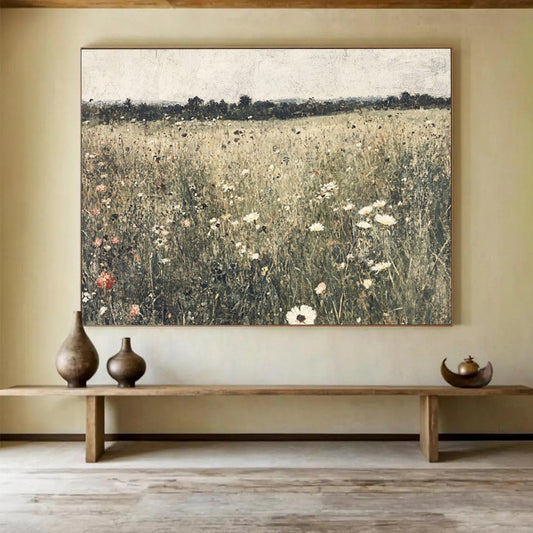
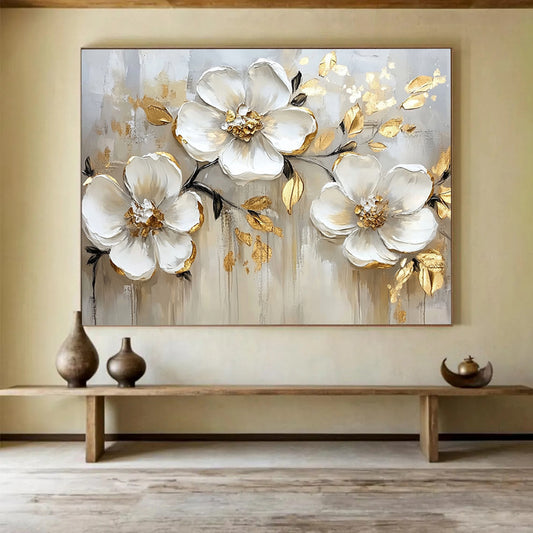
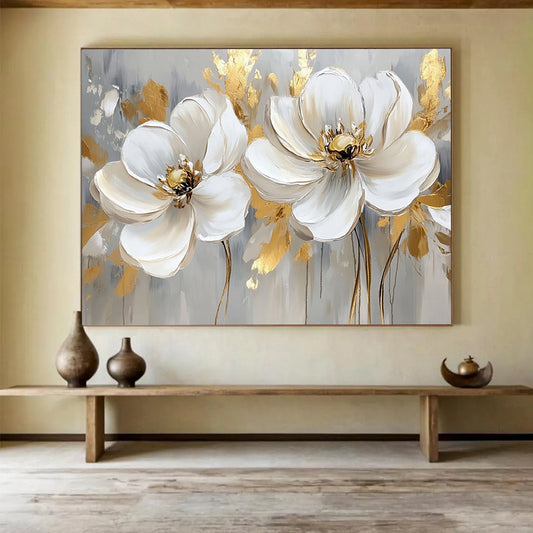
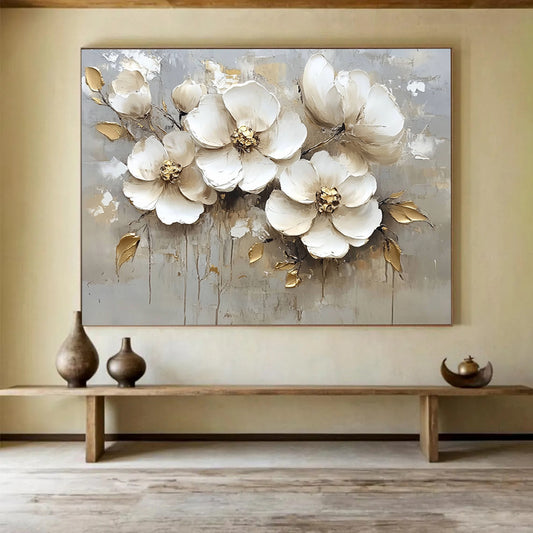
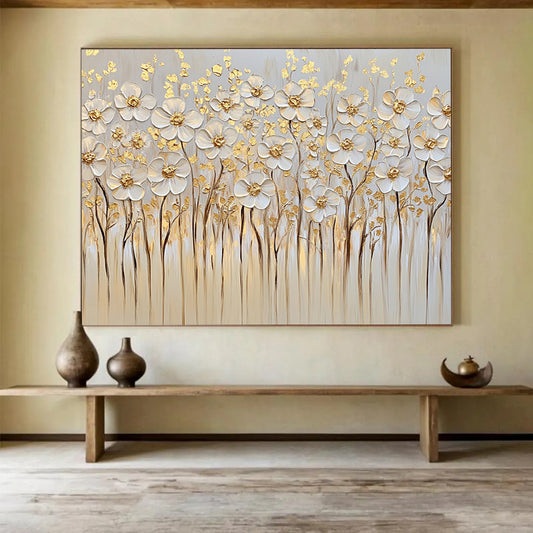
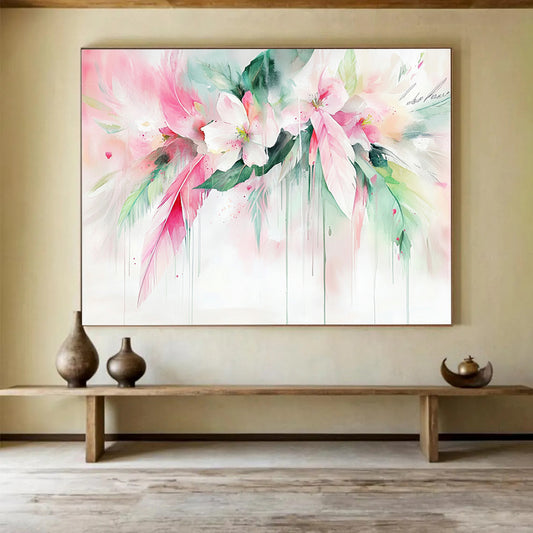
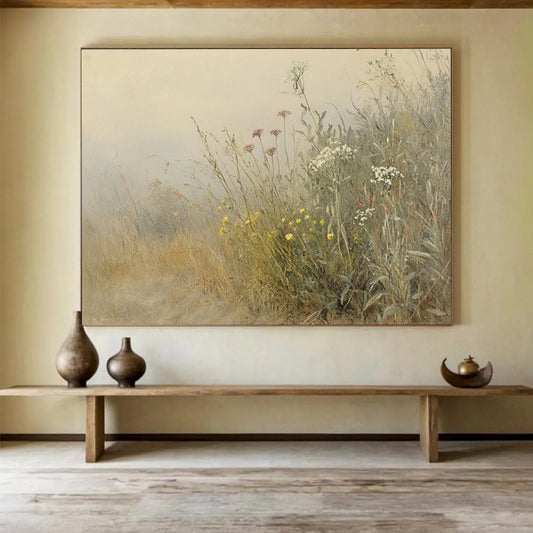
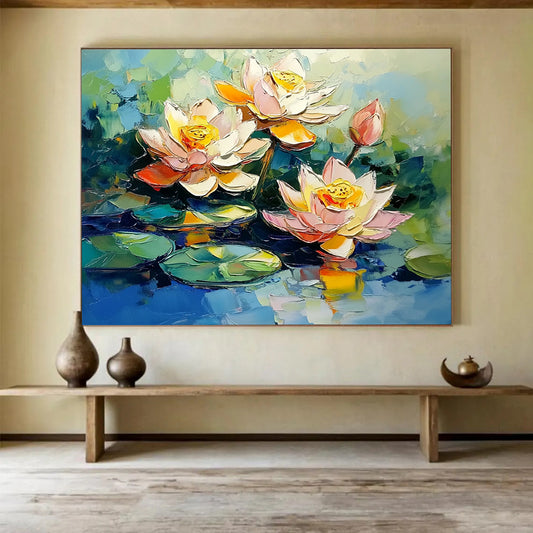
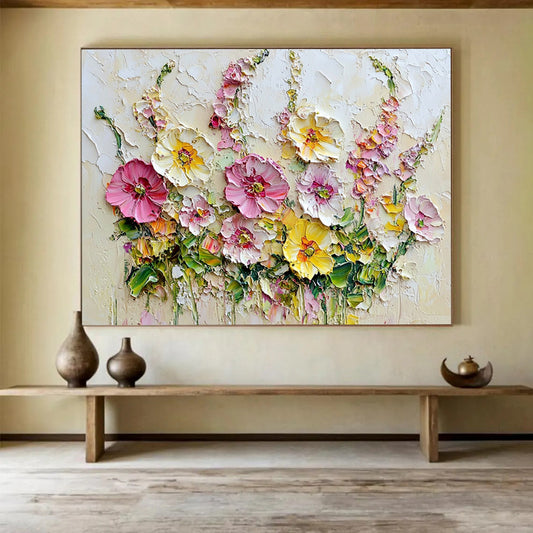
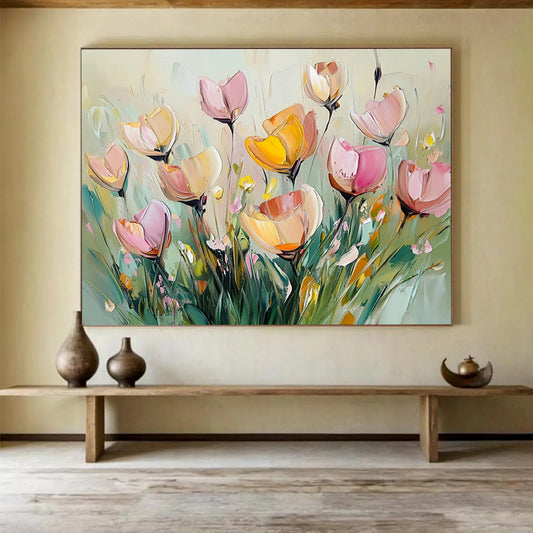
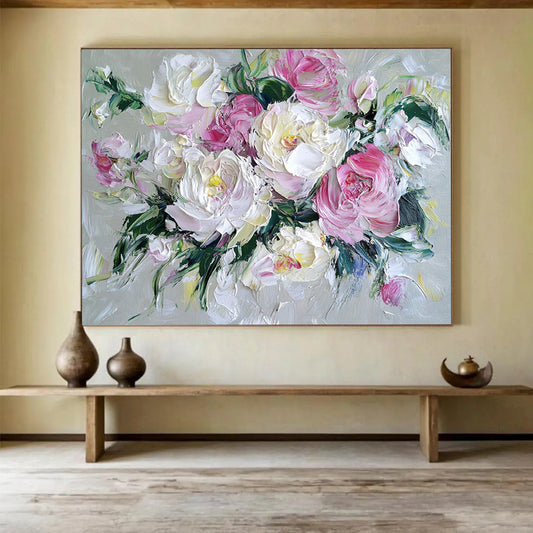
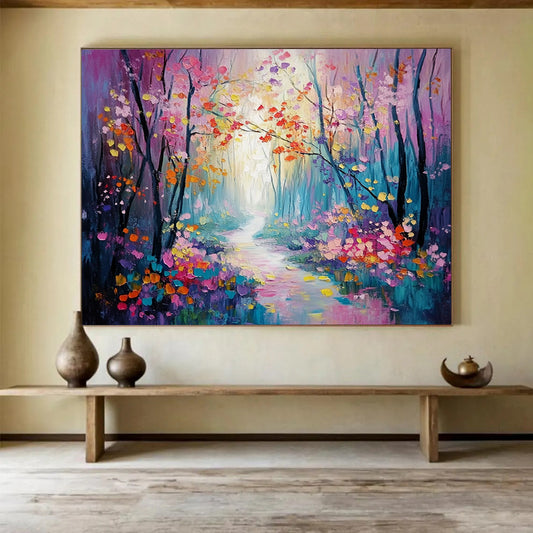
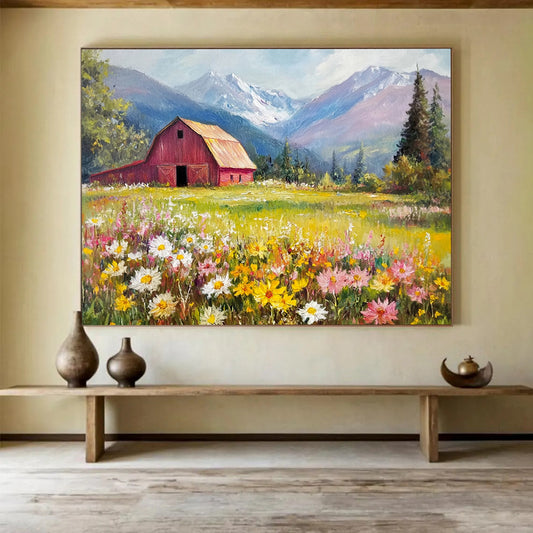
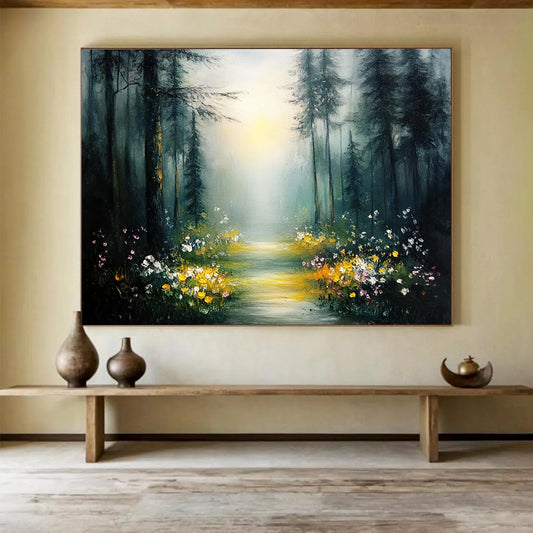
Flower Artwork in this collection means hand-painted canvas in that range—impasto peony, gold-edged white bloom, watercolor drift, a lotus built with a knife. The listing is a language of petal and paste. The piece you receive is painted to order in that language, not a printed seed packet.
Two historical briefs, still useful at checkout
Dutch flower painting treated the table as a collection. The National Gallery of Victoria’s Still life with flowers and butterflies by Maria van Oosterwyck is the public version of that intelligence: many species, dark ground, a glass that holds a window. You do not need thirty named blooms and a spider. You need the same seriousness about arrangement. A contemporary bouquet that works still has a structure—weight at the bottom, a quieter field behind, not every flower shouting at the same volume.
The other brief is close-up. Wikipedia’s article on the flower paintings of Georgia O’Keeffe is the useful correction to the stuffed vase: one bloom, large enough that a busy viewer has to slow down. MoMA’s O’Keeffe page repeats her own sentence about making New Yorkers take time to see a flower. You are not buying an iris from 1930. You are borrowing the scale test. If the canvas is extra-large and the flower is still a small bouquet in the middle, the scale is wasted. Either fill the field with petal climate, or keep the canvas closer.
A working split for this grid:
- One bloom, close: peony or lotus as a plane of paint.
- Quiet bouquet: white and beige, gold as a thin note, not as jewelry.
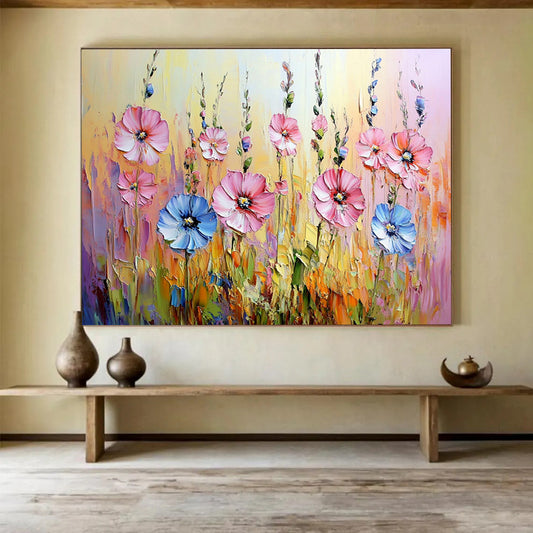
- Water field: lotus or drift that keeps water as climate.
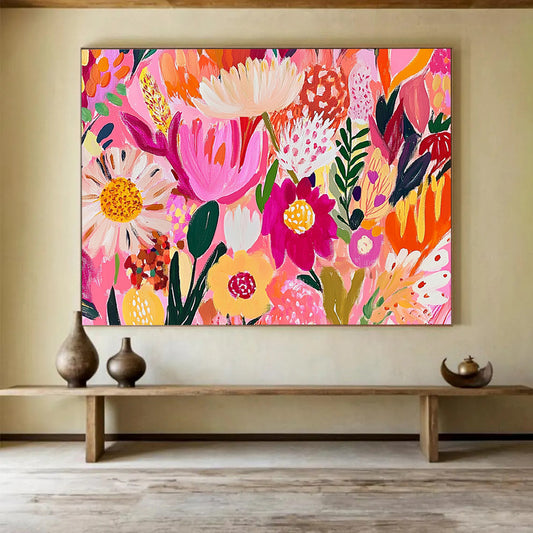
- Floral carnival: every pink and orange at once. Right for a short wall you mean to be loud. Wrong over a walnut table you sit with nightly.
Feathers, toy-bright explosions, and “playful” titles are a third product. They can live in a child’s room. They rarely survive a dining wall.
How a flower should occupy a house
Decide whether the bloom is a figure or a climate. A single large peony is a figure. It wants a wall that can take a protagonist—an alcove, a bed wall, a pier between doors. A field of white flowers on beige is climate. It can travel over a sofa or a sideboard if the marks stay quiet enough to read as plaster and petal, not as a florist’s window.
Color is where flower pictures date. Blush, clay-white, and olive sit with oak and linen. Hot carnival pink next to honey wood fights. Gold leaf on a petal edge can hold as light. Gold leaf as a halo around every bloom turns the canvas into trophy décor. Ask for gold as climate, not as trim.
Impasto is the shop’s advantage and its risk. Knife paste can stand in for the thickness of a petal. Too much sweet peak on pale pink reads as frosting. Lotus on water can take more build because the subject is already a plane. Watercolor drift is the opposite tool: stain, not crust. Do not order heavy plaster if you wanted a wash, and do not expect a wash to carry an eight-foot wall from the far chair.
Light is unkind to pale flowers. A downlight on white impasto becomes glare. Mid values in the ground—beige, sage, a dirtier blush—keep the bloom from bleaching. Bedrooms need lower gloss than dining rooms; reading lamps sit closer. Halls can take a single vertical bloom as a stop. Kitchens can take quieter botanicals if steam and oil will not hit high peaks.
Handmade petal is the reason to order paint. Printed flowers flatten into one photograph of a bouquet. Hand-painted flowers should break: a scraped edge, a thicker ridge at the turn of a petal, a ground that is not one digital beige. Look for angled close shots, oil or acrylic or watercolor on canvas, painted to order. Approve photos before it ships. Custom size exists so the bloom fills the box you measured.
A short buying order
- Decide close bloom, quiet bouquet, or water field.
- Choose a wall that can take a figure or a climate—not both at once.
- Match blush and clay to wood; keep carnival pink off the dining table unless you mean it.
- Choose paste or wash on purpose.
- Check glare on pale peaks.
- Review photos of the finished surface before it ships.
Flower artwork that still works is a bloom as structure. Inventory is what dates.
Is a peony bouquet the same as abstract flower artwork?
A named bouquet is still a still life. Abstract flower artwork keeps petal, mass, and temperature even if you cannot count the species. If the title needs “carnival,” you are closer to pattern than to a bloom.
Will white flowers disappear on a white wall?
They will if the ground is also optical white. Ask for beige, clay, or a mid-gray field so the bloom has a climate to sit in.
Does gold on petals look cheap?
A thin edge of gold as light can hold. Gold on every rim looks like packaging. Ask to keep metal as a note, not as a frame inside the picture.
Can thick impasto flowers go in a bedroom?
Yes, if the peaks stay mid and the pink stays quiet. High glossy frosting under a reading lamp will glare. A lower skin, or the opposite wall, is easier.
Should I match flower art to the duvet or the runner?
No. Bedding changes. Share a temperature with the wood and the wall paint. The canvas should still make sense when the textiles change.
Can I order a larger bloom or a calmer palette?
Yes. Send the wall width and a daytime photo. Keep the same petal language as the listing, with less chroma or a dirtier ground if the room is already warm. Approve images of the finished surface before shipping.